

Clear Aligners in Southern Maryland
Clear aligners are a great solution for patients who want straighter teeth, and discreet aesthetics.
Southern Maryland Orthodontic Studio offers clear aligners for patients of all ages.
We’re now welcoming new patients. Get in touch to learn more and take the next step.

Same Science, Discreet Look
How Clear Aligners Work
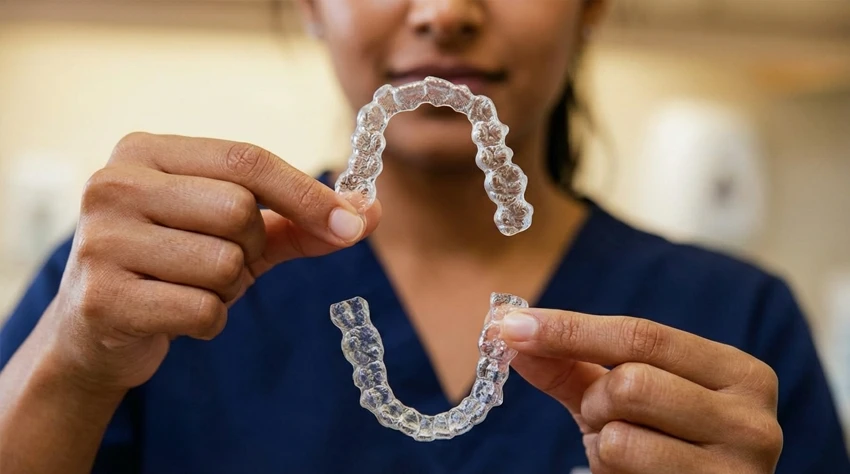
Clear aligners move teeth by utilizing a series of removable plastic trays. Each set of trays applies pressure to move teeth into new positions over time. Fundamentally, aligners and braces use the same mechanics to reposition teeth. Invisalign® treatment is a type of clear aligner.
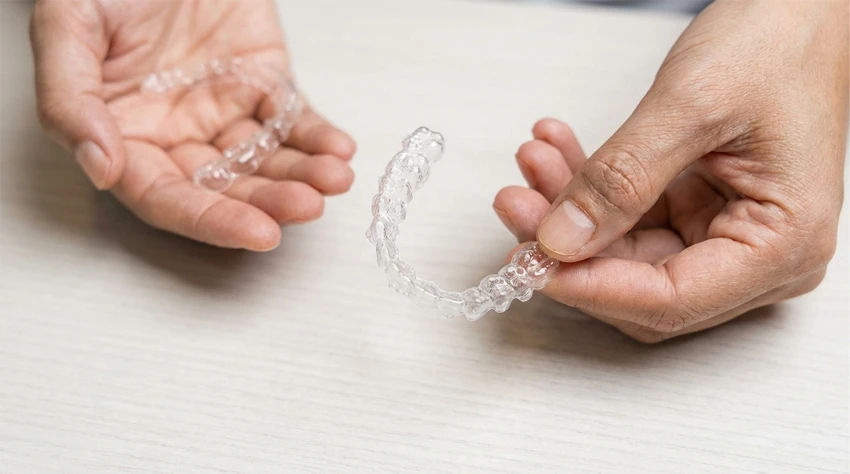
Patients wear each set of aligners for a period of time – up to a couple weeks – before switching to the next set in the series.
Clear aligners only work if they are worn consistently. Most patients wear them the majority of the day and night, removing them for meals, brushing, and drinking anything except for water.
Dr. Hagan uses digital scanning and 3D treatment planning to map out the entire tooth movement sequence before treatment starts. Patients see a simulation of how their teeth will shift from start to finish, then aligners are fabricated based on that plan.
Evaluating Options
Clear Aligners vs. Braces
Both can straighten teeth and fix bites. The difference is aesthetics, control, compliance needs, and case complexity.
Clear aligners tend to be a good fit when:
- A patient prefers low visibility
- Dealing with mild to moderate cases
- The patient can wear trays consistently (very critical)
Metal or clear braces tend to be the better tool when:
- The case is complex or needs elevated control
- A patient isn’t going to keep trays in consistently
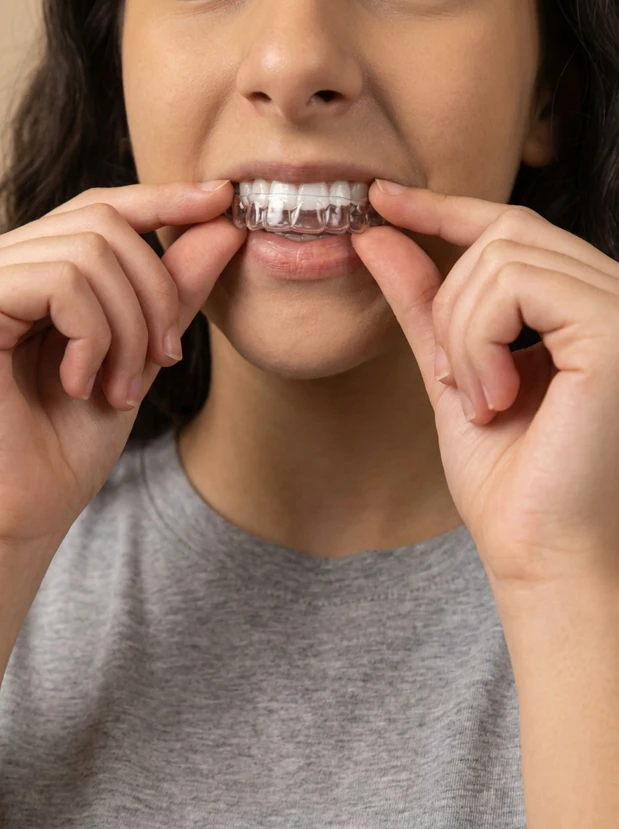
Less Visible, Highly effective
Benefits of Clear Aligners
Aesthetics
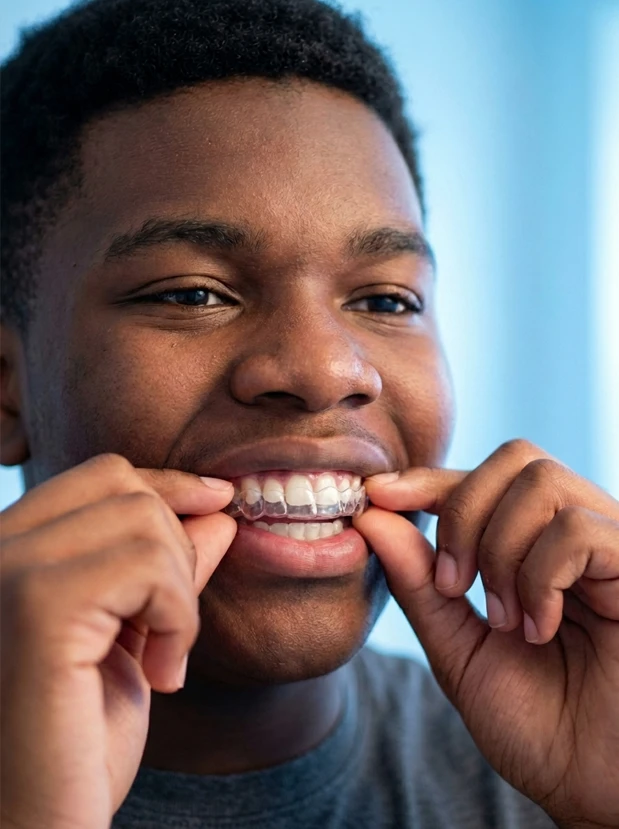
Aesthetics drive the decision for most patients. The trays are virtually invisible at a conversational distance and usually unnoticeable in photos.
Hygiene
With clear aligners, patients remove trays, then brush and floss normally. There is no hardware to trap food debris. With braces, brushing and flossing require threading floss under wires and working around brackets.
Comfort
Soft tissue irritation is also minimal. Metal braces can sometimes chafe and poke the inside of the cheeks or lips. Smooth plastic trays eliminate those issues.
Ideal Candidates for Clear Aligners
Patients often do well with aligners if they:
Patients may not be a great fit if they:
Caring For Clear Aligners
Rinse aligners every time they are removed, and clean them daily with a soft toothbrush, clear liquid soap, and warm or cool water.
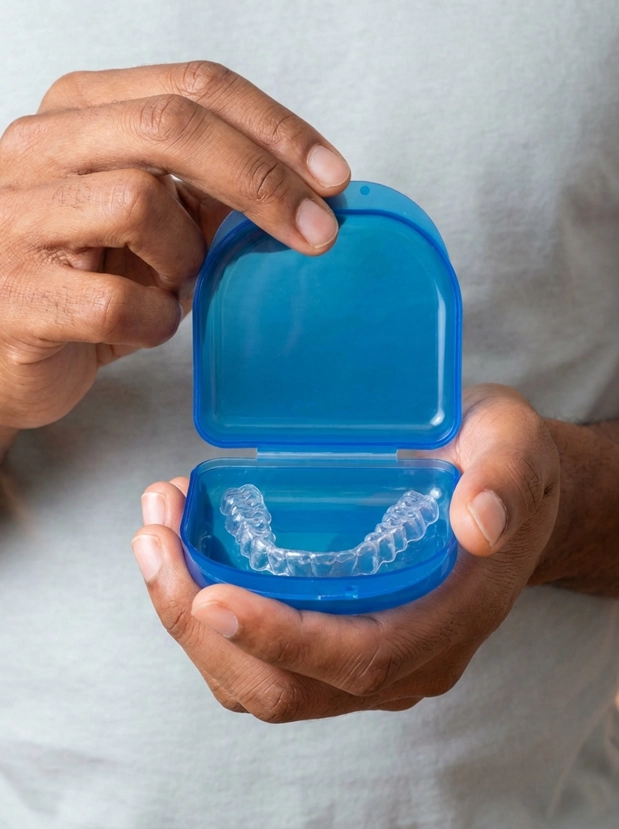
Store aligners in their case when not in use to minimize the chance they are lost or damaged. Avoid applying heat, as it can warp aligners and ruin the fit.
Clear Aligners FAQ
Contact Us
Now Accepting Patients
Get in touch with our team to learn more and start your journey.
Communities we Serve
We treat patients from across Washington, D.C., Prince George’s, Anne Arundel, Charles, and Calvert counties, and more. Some communities we serve include: